
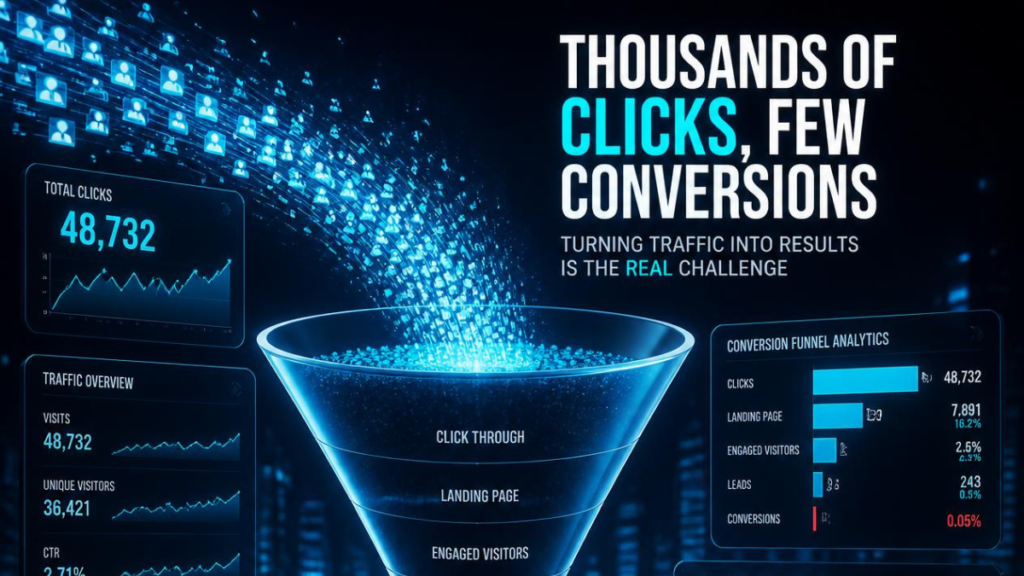
High traffic and low conversions can be incredibly frustrating. But before blaming your ads, it is worth looking at what happens after someone clicks, because that is often where potential customers are lost.
In reality, the problem is often somewhere else. I’ve noticed that many businesses focus heavily on getting clicks but spend very little time understanding what happens after someone lands on the website and that is usually where conversions are lost.
High ad clicks but low conversions usually mean there is a problem after users click your advertisement.
Common reasons include:
- Reaching the wrong audience
- Poor landing page experience
- Slow website speed
- Weak calls-to-action
- Lack of trust signals
- Incorrect conversion tracking
In simple terms, people are interested enough to click, but something is stopping them from taking the next step.
First, What Counts as a Conversion?
A conversion is simply an action you want users to take.
This could be:
- Filling out a contact form
- Booking a consultation
- Making a purchase
- Downloading a guide
- Sending a WhatsApp message
- Signing up for a newsletter
Getting clicks without conversions is like bringing customers into a store and watching them walk out without buying anything.
Your Ad and Landing Page Don’t Match
This is one of the biggest reasons behind poor conversions. Imagine your ad says:
“Get a Free Website Audit.”
A user clicks. But instead of seeing information about the audit, they land on a page talking about your company history. Most people leave immediately. People click because they expect something specific. If your landing page does not deliver that expectation, conversions usually drop quickly.
You’re Bringing in the Wrong Audience
High clicks do not always mean quality traffic. Sometimes advertisements simply reach people who are curious but not ready to take action. For example, someone searching:
“What is digital marketing?”
has a completely different intention from someone searching:
“Hire a digital marketer in Kochi”
One person is learning. The other person may actually be looking for help. Intent matters a lot. I’ve personally seen businesses spend a significant amount on advertising and still struggle to generate leads. In some cases, the advertisements were performing well. The real issue was somewhere else. The website loaded slowly. The contact form was not working properly Or visitors simply could not understand what action they were supposed to take next. This is why looking beyond the click is so important.
Your Website Loads Too Slowly
People are impatient. Especially on mobile devices. If your website takes too long to load, many visitors leave before they even see your offer. Studies have repeatedly shown that even small delays in website loading time can increase bounce rates and reduce conversions. I have personally left websites simply because they felt slow. Most people do the same. A few seconds may not sound like much, but online, it can make a surprisingly big difference.
Your Website Doesn’t Build Trust
Imagine visiting a website that has:
- No reviews
- No portfolio
- No testimonials
- No case studies
- No clear contact information
- An outdated design
Would you trust it immediately? Probably not. People need reassurance before they take action. This is particularly important for service-based businesses. If someone is looking for a digital marketing strategist , they naturally want to know:
- Who have you worked with?
- What results have you delivered?
- Why should they trust you?
Trust often influences conversions more than the advertisement itself.
Your Call-To-Action Is Weak
Sometimes businesses make users work too hard. Buttons like:
- Learn More
- Click Here
do not always create urgency. People usually respond better to actions such as:
- Book a Free Consultation
- Request a Proposal
- Get Your Free Audit
- Talk to an Expert
Small changes in wording can sometimes improve conversion rates significantly.
Businesses Often Focus on the Wrong Numbers
Many businesses become excited when they see:
- High click-through rates
- Thousands of impressions
- Increasing website traffic
These numbers certainly look good. But they are not the final goal. Always ask yourself:
Are these clicks turning into actual business?
A campaign generating fewer clicks but higher-quality leads is often far more valuable than one bringing thousands of visitors who never convert.
Mobile Experience Matters More Than Ever
A large percentage of traffic now comes from mobile devices. Yet many websites still feel difficult to use on phones. Common issues include:
- Buttons that are too small
- Long forms
- Poor layout
- Slow loading speed
- Difficult navigation
People rarely struggle through a poor experience. They simply leave.
Are You Tracking Conversions Properly?
Sometimes conversions are actually happening. You just are not tracking them correctly. Incorrect setup of tools such as:
- Google Analytics
- Google Tag Manager
- Meta Pixel
- Conversion events
can create misleading reports. Before assuming your campaigns are failing, make sure your tracking is accurate. I’ve seen situations where businesses believed their ads were performing poorly, only to discover that their tracking setup was incorrect.
Quick Conversion Checklist
Before increasing your advertising budget, ask yourself:
Is the right audience seeing the ad?
Does the landing page match the advertisement?
Is the website fast and mobile-friendly?
Is the call-to-action clear?
Are there enough trust signals?
Is conversion tracking set up correctly?
Sometimes fixing just one or two of these issues can make a huge difference.
Build a Better Conversion Journey
Think beyond the advertisement itself.
Ask yourself:
- What happens after someone clicks?
- Is the message consistent?
- Does the website answer questions?
- Is the next step clear?
- Does the website feel trustworthy?
Advertisements do not work in isolation. They work as part of an entire customer journey and every small step matters.
Frequently Asked Questions
Why am I getting clicks but no sales?
Common reasons include poor targeting, weak landing pages, slow websites, lack of trust signals, or confusing calls-to-action.
Can a website affect ad performance?
Absolutely. Even a great advertisement can fail if the website experience is poor.
Should I increase my ad budget?
Not immediately. It is usually better to fix conversion issues before spending more money. Increasing budget without solving the underlying problem often leads to more wasted spend.
Can landing page optimization improve conversions?
Yes. Simple improvements such as better messaging, faster loading speed, stronger trust signals, and clearer calls-to-action can significantly improve conversion rates.
Final Thoughts
High clicks and low conversions can feel frustrating But it does not always mean your advertisements are failing. In many cases, the issue lies somewhere else. It could be:
- Poor landing page experience
- Slow website speed
- Weak messaging
- Incorrect targeting
- Missing trust signals
- Broken tracking setup
Instead of focusing only on bringing more traffic to your website, spend some time understanding what happens after someone clicks. Sometimes a few small improvements can make a huge difference. As someone interested in digital marketing services in kerala, one thing I’ve noticed is that businesses often focus heavily on advertising but overlook the website experience. The businesses that pay attention to both usually perform much better. Because at the end of the day, clicks are nice but conversions are what truly grow a business.